
Canarian food
Spanish islands with cooking of their own. Here is the short list of what that means.
The Canary Islands are Spanish, but the food is not. There is no paella here, no jamón culture to speak of, no tapas tradition in the mainland sense. What there is instead is a short list of things that exist nowhere else in Spain, built out of what seven volcanic islands in the Atlantic could actually produce.
The short version
If you remember five things, remember these:
- Papas arrugadas — small potatoes boiled in their skins in heavily salted water until a white salt crust forms. Served with mojo.
- Mojo — the sauce. Red from dried peppers, green from coriander or parsley. Always served on the side.
- Gofio — grain toasted first, then milled. A staple since before the Spanish arrived.
- Goat's cheese — the islands win world awards for it with some regularity.
- Almogrote and palm honey — both from La Gomera, both impossible to find properly anywhere else.
Why the food is like this
Three things shaped it. The islands are volcanic, so the soil is mineral-rich and drains hard, which suits vines, potatoes and not much else. They are isolated — 1,400 km from mainland Spain, 100 km from Africa — so what arrived, stayed and evolved on its own. And they were poor for most of their history, so the cooking is built on making a lot out of very little.
That last point explains more than you would think. Gofio exists because toasted grain keeps. Almogrote exists because cheese that had gone rock hard had to be made edible somehow. Papas arrugadas exist because sea water was free and fresh water was not.
What you will be served
In a guachinche
A guachinche is a Tenerife institution: a small, seasonal, family-run place, often attached to a house, that started as somewhere to sell the family's own wine and ended up serving food with it. Expect grilled meat, papas arrugadas, cheese, and a jug of young red wine.
By the sea
Fresh fish — vieja, cherne, sama — grilled whole and served with papas and green mojo. Simple, and the reason to eat on the coast rather than inland.
On the table before you ask
Bread, two bowls of mojo and often a dish of almogrote or a slice of cheese. This is where most visitors meet Canarian food for the first time.
The things worth taking home
Practically speaking: mojo and gofio travel well and cost little. Cheese is the thing most worth the hassle. Palm honey and almogrote are the two you genuinely cannot buy elsewhere. And rum, if you drink.
Worth taking home
-
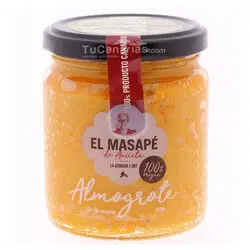
Almogrote, the Gomeran cheese pâté
Cured cheese crushed with oil, garlic and pepper. Spread it on bread.
Buy -
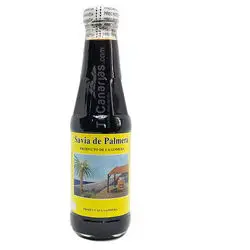
Palm honey from La Gomera
Boiled palm sap, not bee honey. Tastes of burnt caramel.
Buy -
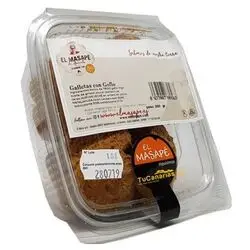
Gomeran biscuits
Made one by one on La Gomera, with gofio in the dough.
Buy -
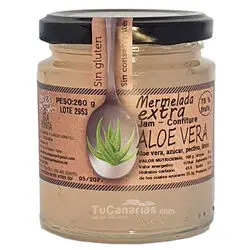
Aloe vera jam
75% fresh aloe pulp, made by hand on Gran Canaria.
Buy